
Introduction to Power Banks
In an increasingly mobile-centric world, power banks have become essential accessories for various individuals. A power bank is a portable device that stores electrical energy for later use, allowing users to recharge their electronic devices on the go. With a growing reliance on smartphones, tablets, and other gadgets, having a reliable power bank can be crucial for maintaining connectivity and productivity. Choosing the right power bank can significantly impact the overall user experience, as different models offer varying capacities, charging speeds, and compatibility with devices.
The importance of power banks transcends simple convenience; they serve as lifelines for professionals, gamers, travelers, and anyone who relies heavily on mobile technology. For instance, a business traveler may depend on a power bank to keep their devices charged during long flights or busy days filled with meetings. Gamers often require a consistent power source during extended play sessions, while adventurers exploring remote areas cannot afford the inconvenience of a dead battery. Therefore, understanding the specifications and features of different power banks is vital for users to make an informed decision tailored to their needs.
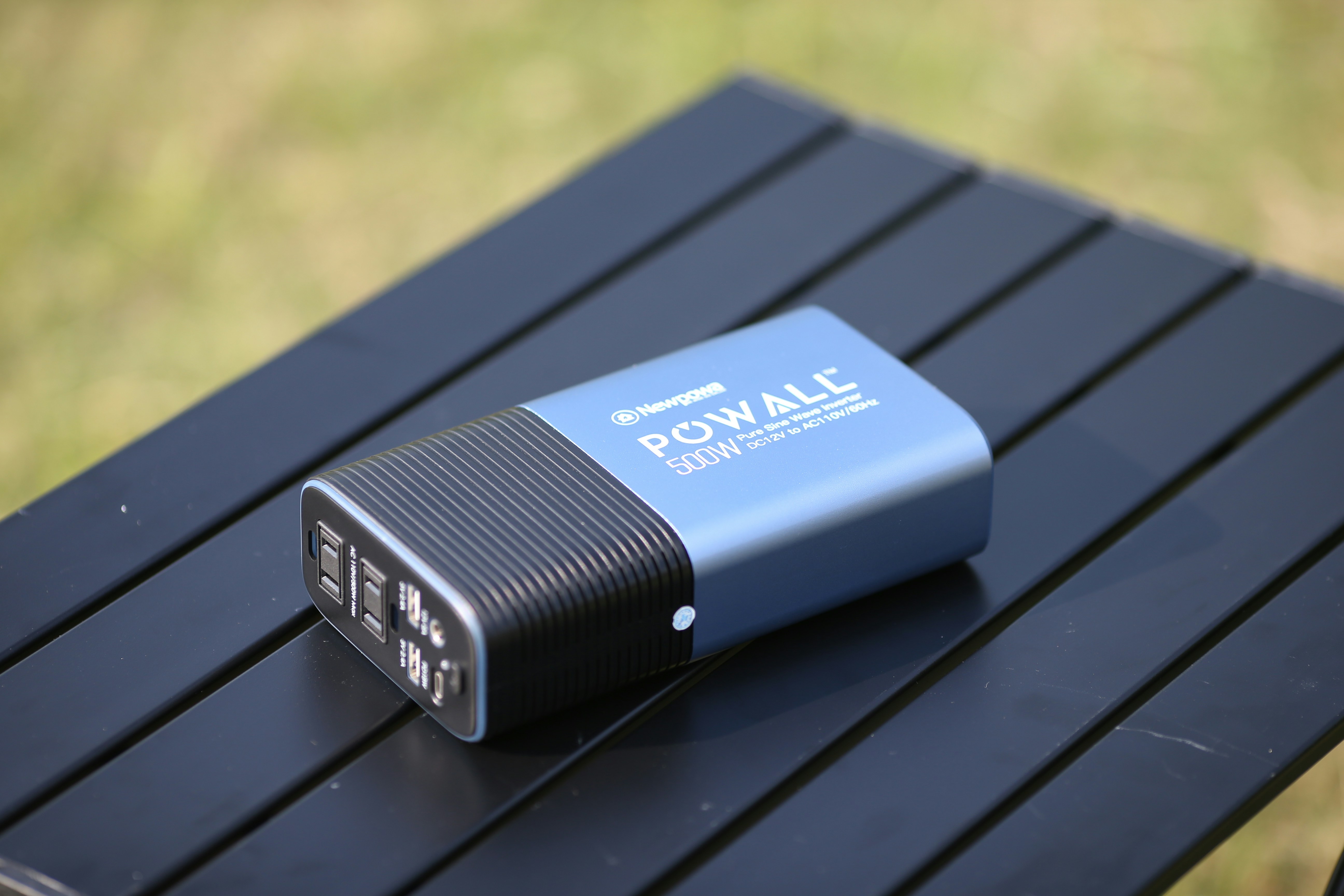
This guide will compare three notable power bank models: the Anker PowerCore 24K, Baseus Blade 100W, and RAVPower 20000mAh PD Pioneer. Each of these models offers unique advantages and caters to specific user requirements. Evaluating their performance, capacity, and compatibility will help readers discern which power bank is best suited for their lifestyle and charging needs. The ensuing comparison aims to clarify the considerations involved in selecting an appropriate power bank, ensuring that users can confidently equip themselves with the technology that best aligns with their preferences.
Capacity Comparison
When evaluating portable chargers, capacity is a critical factor that significantly influences their usability and suitability for different needs. In this regard, the Anker PowerCore 24K, Baseus Blade 100W, and RAVPower 20000mAh PD Pioneer provide varied mAh ratings and performance capabilities. The Anker PowerCore 24K boasts a robust 24,000 mAh capacity, positioning it as a strong contender for users seeking extended battery life on the go. This high capacity enables it to charge devices multiple times, making it ideal for travelers or individuals with power-hungry gadgets.
On the other hand, the Baseus Blade 100W presents a capacity of 20,000 mAh, which also allows for substantial charging capabilities. This model is particularly beneficial for users who require fast charging as it can deliver up to 100W output. This means that although its mAh rating is lower than that of the Anker PowerCore 24K, it can still cater to devices that demand higher wattages or need speedy recharges, striking a balance between capacity and charging efficiency.
Lastly, the RAVPower 20000mAh PD Pioneer rounds out this comparison with its nominal capacity of 20,000 mAh. It offers Power Delivery technology which can also adapt to different devices and provide faster charging when needed. Its versatility is noteworthy, as users can expect a steady recharge for both smartphones and larger devices like tablets. The mAh ratings for these devices correlate closely to their real-world charging capacities; for example, while the Anker PowerCore can potentially provide multiple charges for smartphones and even some tablets, the Baseus Blade 100W and RAVPower models stand out for their rapid charging capabilities. Therefore, users must consider not only the mAh rating but also the specific charging needs of their devices.
Charging Speed Analysis
The charging speed of a power bank is crucial for consumers seeking efficiency and convenience when powering their devices. In this section, we will examine the charging speeds of three prominent power banks: Anker PowerCore 24K, Baseus Blade 100W, and RAVPower 20000mAh PD Pioneer. Central to our evaluation are output wattage, supported charging protocols, and real-world performance metrics.

- 100W Ultra-Fast Charging: This product delivers a peak power output of 100W. Under optimal ambient temperatures, when co…
- 3-in-1 Multi-Port Fast Charger: Equipped with 2× USB-C & 1× USB-A ports, this 100W USB-C charger block supports simultan…
- Effective Temperature Drop: This compact wall charger adopts advanced high-polymer silicon material for superior heat di…
Firstly, the Anker PowerCore 24K boasts a high output of 24 watts, which allows it to swiftly charge compatible devices. It features Power Delivery (PD) support, enabling rapid charging for various smartphones and tablets, including the latest iPhone and Samsung models. Users can expect approximately 50% charge for an iPhone in about 30 minutes, showcasing its efficiency in practical scenarios.
On the other hand, the Baseus Blade 100W stands out with an impressive output of 100 watts, positioning it as a powerful contender in this showdown. Its multi-protocol support, including PD 3.0 and Quick Charge, facilitates rapid charging for a vast range of devices. With this power bank, users can achieve a full charge on compatible laptops in around an hour, providing a significant advantage for those with multiple devices requiring power.
Finally, the RAVPower 20000mAh PD Pioneer offers a well-rounded performance with its 18-watt output and PD support. While its charging speed is respectable, it is slightly slower than the aforementioned models. Users can anticipate about 2 hours to fully charge their devices, appealing to those who prefer a balance of capacity and speed.
In summary, each power bank presents unique charging speeds influenced by output wattage and supported protocols. The Anker PowerCore 24K excels in smartphone charging efficiency, the Baseus Blade 100W leads in versatility for larger devices, and the RAVPower 20000mAh PD Pioneer provides a dependable performance suitable for various users. Understanding these nuances helps consumers make informed choices based on their specific charging needs.
Build Quality Examination
When evaluating the build quality of power banks, several factors come into play, including materials used, design considerations, and overall durability. The Anker PowerCore 24K, Baseus Blade 100W, and RAVPower 20000mAh PD Pioneer exhibit distinctive characteristics that contribute to their usability and appeal.

- 65W High-Power Fast Charging: Equipped with USB-C built in cable, USB-C and USB-A ports, the USB-C cable and port suppor…
- 25,000mAh Large Capacity: With a built-in 25,000mAh high-capacity battery, a full charge can power for iPhone 16 Pro up …
- Innovative Retractable Cable Design: Featuring a built-in retractable 33.86in USB-C cable, this power bank offers a tang…
The Anker PowerCore 24K is constructed using a high-quality plastic casing reinforced to withstand everyday wear and tear. Its sleek design is not just aesthetically pleasing but also functional, as it features a compact shape that enhances portability. Anker has incorporated advanced thermal management systems in this model to prevent overheating, making it suitable for charging multiple devices simultaneously without sacrificing performance.
In contrast, the Baseus Blade 100W takes a more innovative approach with its aluminum alloy body. This not only provides excellent durability but also aids in heat dissipation, allowing for efficient operation even during extensive use. Its unique vertical design is an attention-grabber, enhancing grip and providing a distinctive look compared to traditional power banks. The design is user-friendly, with ports positioned for easy access, even when the device is plugged in.
On the other hand, RAVPower’s 20000mAh PD Pioneer showcases a robust build with both plastic and metal components. This blend of materials ensures longevity while maintaining a lightweight feel. The RAVPower model is particularly noted for its ergonomic design, allowing for easy handling. It also features a protective casing that guards against accidental drops and impacts, enhancing its durability in various scenarios.
In conclusion, each of these power banks exhibits a strong commitment to build quality, with unique materials and design features that enhance their function and usability. Both the Anker and Baseus models stand out for their innovative design and thermal management strategies, while RAVPower excels in durability and ergonomics. This assessment illustrates that the choice among these power banks can greatly depend on personal preferences regarding design and build characteristics.
Weight and Portability Factors
When selecting a power bank, weight and portability are critical considerations, particularly for frequent travelers. Anker PowerCore 24K, Baseus Blade 100W, and RAVPower 20000mAh PD Pioneer all serve as excellent portable charging solutions, but they differ notably in size and weight, which can significantly affect the user experience.
The Anker PowerCore 24K weighs approximately 1.11 pounds and measures 6.4 x 3.1 x 0.9 inches. This compact design makes it relatively easy to slip into a backpack or even larger handbags. Despite its weight, it offers a balanced feel, ensuring that it does not become cumbersome during travel. Users often appreciate how well it fits into various compartments, optimizing organization while on the move.
In contrast, the Baseus Blade 100W is designed with sleekness in mind, weighing around 1.09 pounds and featuring dimensions of 6.3 x 3 x 0.8 inches. This slim profile contributes to its high portability, allowing it to fit seamlessly into pockets or smaller bags. The baseus power bank stands out for its discreet nature, making it an ideal choice for those looking to minimize bulk in their travel gear. Users often note that this aspect of design enhances their carry experience.
The RAVPower 20000mAh PD Pioneer weighs slightly more at 1.23 pounds, extending its dimensions to 6.5 x 3.1 x 1 inch. While this makes it less portable compared to the others, the extra weight equates to a larger battery capacity, which can be advantageous for longer trips. Users should consider whether the additional weight is manageable for their travel style. Ultimately, while the size and weight of a power bank can impact portability, these models offer diverse features catering to different travel needs.
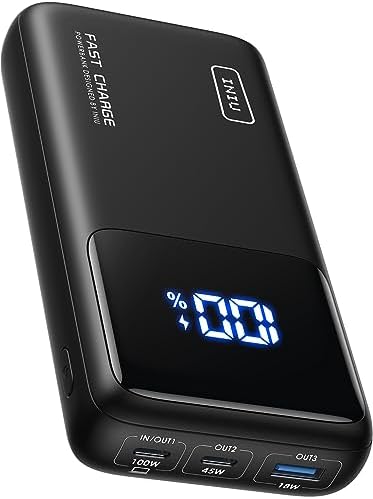
- 【From INIU–the SAFE Fast Charge Pro】Experience the safest charging with over 38 million global users. At INIU, we use o…
- 【100W Fast Charging for All Devices】INIU’s inspiring 100W charges your MacBook Pro up to 50% in 30 mins. Hit your phones…
- 【25000mAh for A Week】The massive power supply can charge MacBook Pro 14ʺ 1.2 times or iPad Mini 6 3.4 times, abundant ev…
Port Options and Versatility
The comparison of power banks is not solely determined by their capacity; the type and number of ports they offer significantly influence their usability. In this regard, the Anker PowerCore 24K, Baseus Blade 100W, and RAVPower 20000mAh PD Pioneer each present unique features that cater to various user needs.
The Anker PowerCore 24K features a balanced selection of ports, including two USB-A ports and one USB-C port. This combination allows for simultaneous charging of multiple devices, with power delivery capabilities provided through the USB-C port. Users can charge a smartphone and a tablet at the same time without sacrificing charging speed. Furthermore, the layout of the ports is positioned to accommodate various cable configurations, enhancing user convenience.
In contrast, the Baseus Blade 100W takes versatility to the next level with its impressive range of ports, which include two USB-A ports and two USB-C ports, in addition to an AC outlet. This diverse array allows users to charge various devices, from laptops to smartphones, simultaneously. The inclusion of an AC outlet makes the Baseus Blade an attractive option for users who require a full-sized power source on-the-go. The well-thought-out positioning of ports helps streamline the charging process, allowing for efficient use of space in crowded settings.
Lastly, the RAVPower 20000mAh PD Pioneer offers two USB-A ports and one USB-C port. This setup supports multiple devices, yet its port selection may seem less versatile when compared to others in this showdown. However, RAVPower optimizes charging through its Power Delivery technology, which ensures swift charging for compatible devices. The layout, though not as extensive as the Baseus, still provides adequate convenience for most users.
Ultimately, the effectiveness of the port arrangements in each power bank contributes to their overall practicality, making them suitable for different charging needs in various contexts.
Real-World Performance Review
When evaluating the real-world performance of portable battery chargers, user experiences play a critical role in understanding the reliability and effectiveness of each device. In this review, we explore feedback from users who have tested the Anker PowerCore 24K, Baseus Blade 100W, and RAVPower 20000mAh PD Pioneer under various scenarios such as travel, multiple device charging, and high-energy demands.
The Anker PowerCore 24K has garnered praise for its impressive charging speed, especially during travel. Users have reported that it can charge larger devices like laptops and tablets efficiently, making it a favored choice for professionals on the go. Testimonies indicate that even after heavy usage, this power bank maintains a consistent output, which is crucial for maintaining device functionality during critical moments. Additionally, its build quality has been highlighted, with users noting its durability even in rugged environments.

- 220W Total Output Power: Keep your office setup running strong with 220W total output from two USB-C ports and one USB-A…
- Flight-Ready 20K Power: Carry 20,100mAh (72.36Wh) of portable, TSA-approved power, enough for up to 4.2 days of video st…
- 140W Max Fast Charging: Delivers up to 140W high-speed output for fast laptop charging when connected to a 5A cable. Cha…
On the other hand, Baseus Blade 100W users appreciate its sleek design and high power delivery capability. Many testimonials highlight its effectiveness in sustaining multiple device charges simultaneously, which is advantageous for users with smartphones, tablets, and wearables. However, some users noted a slight overheating issue during extended use; this raised concerns about the longevity of the unit under intense conditions. Nonetheless, the charging speed remains a strong point, showcasing its efficiency in fast-paced environments.
Lastly, RAVPower’s 20000mAh PD Pioneer is recognized for its balance of capacity and versatility. Users have expressed satisfaction with its ability to charge their devices multiple times without needing a recharge. Some reviews mention its effectiveness during outdoor activities where access to power sources is limited. However, a few users indicated that, under stress with numerous devices, it may not keep up as well as the Anker model.
In summary, user experiences reveal that while all three power banks have their strengths, the choice ultimately depends on individual charging needs and scenarios. Each brand offers unique advantages that cater to varying preferences, solidifying their places in the competitive market of portable power solutions.
Price Comparison and Value for Money
When evaluating portable charging solutions such as the Anker PowerCore 24K, Baseus Blade 100W, and RAVPower 20000mAh PD Pioneer, price is a critical factor that can significantly influence consumer choice. Each of these power banks comes with its own unique set of features tailored to meet diverse user needs, and understanding their price points in relation to these features is essential for making an informed decision.
The Anker PowerCore 24K is priced competitively in the mid-range segment. It offers a robust capacity of 24,000mAh, delivering ample power for a range of devices. Its fast charging capabilities and high output make it a solid choice for users who frequently travel or are always on the go. However, comparisons with other models reveal that while it is efficient, it is slightly less affordable than the Baseus Blade 100W, which, at its price, offers remarkable features such as rapid charging capabilities and a lighter build.
The Baseus Blade 100W leverages its pricing strategy by incorporating advanced charging technology that not only supports USB-C but also accommodates multiple device types simultaneously. Its price reflects the cutting-edge features, positioning it as a value-laden option for tech enthusiasts who prioritize speed and efficiency. On the other hand, the RAVPower 20000mAh PD Pioneer strikes a balance with its pricing and feature array, offering an adequate capacity complemented by Power Delivery (PD) technology. This model appeals to budget-conscious consumers who require reliable performance without extra frills.
- 100W Ultra-Fast Charging: This product delivers a peak power output of 100W. Under optimal ambient temperatures, when co…
- 3-in-1 Multi-Port Fast Charger: Equipped with 2× USB-C & 1× USB-A ports, this 100W USB-C charger block supports simultan…
- Effective Temperature Drop: This compact wall charger adopts advanced high-polymer silicon material for superior heat di…
Ultimately, the best choice will depend on individual needs, as each option presents distinct advantages. The Anker PowerCore 24K is ideal for those prioritizing capacity, while the Baseus Blade 100W caters to users seeking quick charging solutions. Meanwhile, the RAVPower provides a comprehensive mix of performance and value, making it a well-rounded contender. Therefore, assessing these factors against their corresponding price tags enables users to determine which power bank delivers optimal value for their specific requirements.
Pros and Cons of Each Model
When selecting a power bank, understanding the strengths and weaknesses of each model is crucial for making an informed decision. Below, we summarize the pros and cons of the Anker PowerCore 24K, Baseus Blade 100W, and RAVPower 20000mAh PD Pioneer.
Anker PowerCore 24K
Pros:
- High-capacity of 24000mAh ensuring multiple charges for devices.
- Fast charging capabilities with PowerIQ technology.
- Compact design making it portable and easy to carry.

- Slim Size, Big Power: One of the slimmest and lightest 10,000mAh portable chargers on the market. Provides 2 charges for…
- Lightweight and Compact: With its compact 5.99 × 2.81 × 0.61-inch size and weighing a mere 8.6 oz, it’s designed for on-…
- Tough and Trustworthy: Engineered for toughness with scratch resistance in mind. Its durability is certified by a 3.2 ft…
Cons:
- Higher price point compared to some competitors.
- Heavier than other models, possibly affecting portability.
Baseus Blade 100W
Pros:
- Ultra-fast charging with a 100W output, ideal for quick top-ups.
- Supports charging multiple devices simultaneously.
- Sleek and lightweight design enhancing portability.
- 100W Ultra-Fast Charging: This product delivers a peak power output of 100W. Under optimal ambient temperatures, when co…
- 3-in-1 Multi-Port Fast Charger: Equipped with 2× USB-C & 1× USB-A ports, this 100W USB-C charger block supports simultan…
- Effective Temperature Drop: This compact wall charger adopts advanced high-polymer silicon material for superior heat di…
Cons:
- Lower capacity of 20000mAh might require more frequent recharging.
- Build quality may feel less premium compared to other models.
RAVPower 20000mAh PD Pioneer
Pros:
- Versatile charging options including USB-C and USB-A ports.
- Power Delivery compatibility allows for efficient charging of laptops.
- Affordable pricing without compromising quality.
Cons:

- Capacity of 20000mAh may not satisfy power-intensive users.
- Weight might be cumbersome for everyday carry.
By examining these pros and cons, potential buyers can better appreciate the unique features of each power bank model, enabling them to choose the best option that suits their needs.
Final Recommendations
After a thorough examination of the Anker PowerCore 24K, Baseus Blade 100W, and RAVPower 20000mAh PD Pioneer, it is clear that each power bank has distinct features tailored to different user needs. Based on our findings, we can make specific recommendations to help users choose the optimal device based on their individual requirements.
For those prioritizing high-capacity performance, the Anker PowerCore 24K stands out as the most robust option. With its impressive capacity, this power bank can effectively charge multiple devices several times before needing a recharge itself. It is particularly suitable for users who are frequently on the go and require consistent power for larger devices such as laptops and tablets. The Anker’s reliable output also ensures that it can handle a variety of charging needs without compromise.
If users are seeking speed and efficiency, the Baseus Blade 100W is a superior choice. Its ability to deliver rapid charging speeds makes it ideal for tech-savvy users who require quick top-ups for their devices. This model excels in scenarios where time is of the essence and is especially recommended for gaming devices and laptops that support fast charging. The sleek design adds to its appeal, making it a great companion for professional environments.
For the budget-conscious consumer, the RAVPower 20000mAh PD Pioneer offers excellent value for its price point. While it may not match the higher performance metrics of the other two models, it still provides reliable charging for everyday devices such as smartphones and smaller tablets. This power bank is best suited for users who need a dependable backup without splurging on advanced features.
In conclusion, the best choice ultimately depends on individual needs: the Anker for capacity, the Baseus for speed, and the RAVPower for budget-friendly performance. By considering these recommendations, users can select the power bank that aligns best with their lifestyle and charging demands.